AI gives you the tools, but it still doesn’t make you a mechanic
Every few years, marketing finds itself another magic button that is going to put us all out of a job. There’s that plugin that was going to replace strategists, the automation tool that was going to replace account management, or no-code builders that were going to replace developers.
Now it’s AI’s turn. And don’t get me wrong, AI truly is extraordinary. Here at Vega we use it every day to speed up workflows, help structure thinking, accelerate production and remove repetitive work.
But somewhere along the way, people started confusing access to tools with access to expertise – these are not the same thing and thinking so is dangerous.
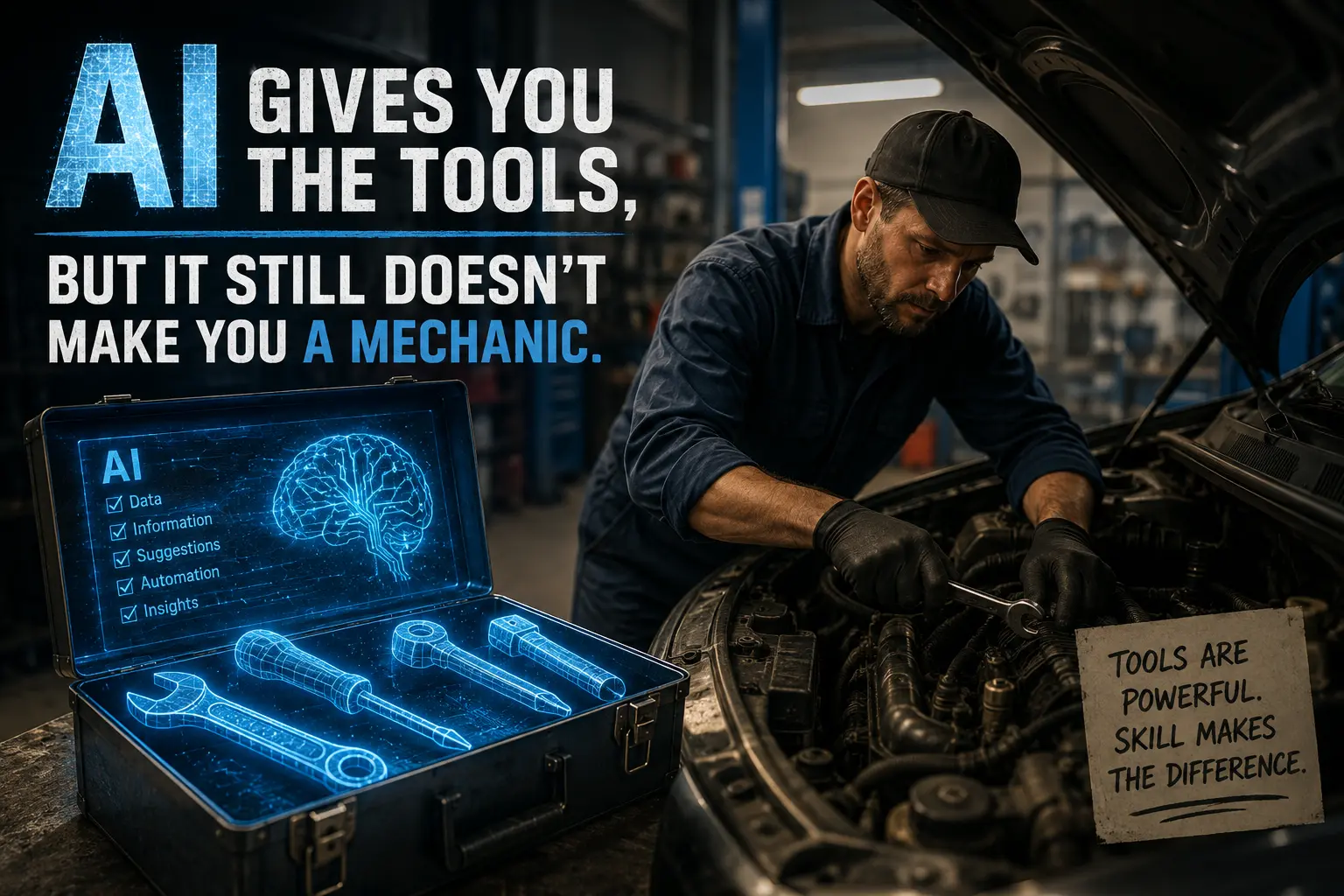
AI can absolutely hand you a socket set… it can even explain what the tools do. But this does not suddenly make you a mechanic!
You can ask Chat GPT or AI Search to write SEO content, and it will blindly pump out something that at first glance looks good. But does it really understand search intent, crawl efficiency, internal linking strategy, SERP overlap, topical authority or why Google quietly ignores half the pages people publish?
You can ask Perplexity to generate ad copy, and again it will deliver something that looks perfectly acceptable. But in doing so do you understand positioning, audience psychology, offer structure or why some campaigns burn £50,000 while others print money?
And yes, you can ask Claude to write code, but unless you understand architecture, security, scalability or why one badly implemented function can bring an entire product down you’re just setting yourself up for an almighty issue down the line.
The gap between “output” and “good output” is still expertise. And that gap matters more now, not less!
AI is lowering the barrier to producing things, but it is not lowering the barrier to producing things well. This is the distinction some people seem to be missing. Just because you now can do something doesn’t mean you should.
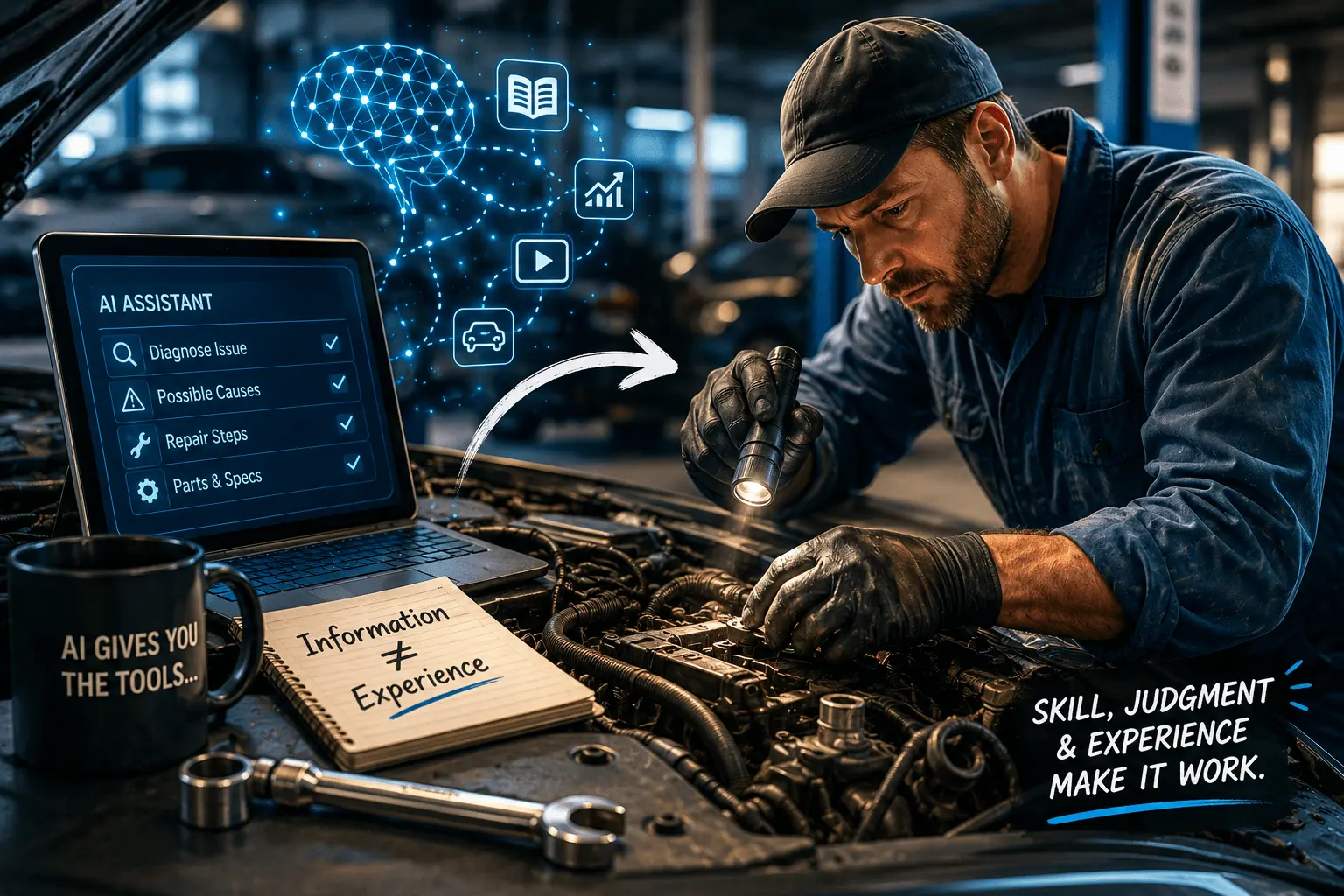
The internet is rapidly filling with content that looks correct, sounds acceptable and reads well; at least at first glance. But underneath it all is a complete absence of experience, judgement and commercial understanding. Let’s be honest too, you can normally spot it within a couple of seconds – and not simply due to the overuse of em dashes.
It’s that SEO article that technically answers the question while completely missing what the user really needed.
It’s the LinkedIn thought leadership post which when you actually read between the lines is just utter nonsense (tbf, some of that has nothing to do with AI – but we’ll save the LinkedIn influencer conversation for another day).
It’s the copy that uses all the right buzzwords while somehow says absolutely nothing.
AI is very good at delivering what it has been trained to think good work should look like. That is not the same thing as understanding why good work works and that distinction is becoming incredibly important.
The businesses getting real value from AI are not the ones blindly replacing specialists with prompts and ever-increasing API fees. They are the ones pairing experienced people with better tools that give them the headspace to do the clever stuff they’ve been employed to in the first place.
The best SEO strategists can now move faster than ever before.
The best developers can deliver prototypes quicker.
The best analysts process larger datasets with relative ease.
The best marketers can test more ideas in less time.
Notice the pattern there… Expertise still comes first.
A bad strategist with AI is still a bad strategist. All that happens is they will produce bad ideas faster. When everybody has access to the same tools, judgement becomes the differentiator; this is when expertise becomes the most valuable commodity.
Knowing what to do is valuable, and AI will be able to help with that. Knowing why you are doing it is where the real advantage sits, and this is the bit that AI can’t really replace. The irony is that AI is making the world dumber, but at the same time is increasing the value of genuine expertise over time.
As low-quality output becomes more abundant, people are becoming better at recognising the difference between surface-level competence and actual understanding.
Let’s be clear - anybody can generate 2,000 words now on virtually any topic. However, far fewer people can generate insight. And clients, users and customers eventually notice.
Despite what some people on LinkedIn would have you believe, prompting an LLM does not magically replace years of pattern recognition, failure, testing and commercial experience.
A junior with Chat GPT or Claude is still a junior, they just have easier ways to get information. They still need to know if the information they are receiving is correct, and they still need to know how best to use the data they now have at their disposal.
AI is a multiplier, and multipliers work both ways. If great people have great tools and the output becomes exceptional. However, give inexperienced people powerful tools without understanding, and you’re likely just creating faster ways to make expensive mistakes.
It is my honest belief that this is the conversation businesses should actually be having right now.
Not “Will AI replace experts?”
But rather:
“What happens when experts become exponentially more efficient?”
That is where things get interesting.